

From Creator to Follower: How AI Risks Putting Humans in a Subordinate Role
The AI agent is the next evolution that fear-based marketing is trying to sell us. It could handle our entire business, filling every executive spot in our company, creating all the content, sending all the emails, and telling us what to do each day from a convenient dashboard. The other day on Instagram, I saw an influencer strolling into her kitchen in her PJs saying something like, “I woke up, drank coffee, and look at everything my AI agent did for me: all the strategies, emails, and implementations.” It sounds like a dream life. A life I have already lived without AI. A few years ago, my husband and I were digital nomads, traveling across the US and Greece, while I ran my business virtually. I woke up seaside, spent the day sightseeing in some magazine worthy place, and worked at night. I created my business from a place of intention and alignment with the life I wanted to create. The false narrative we’re being sold is that this is only possible with AI. They want you to believe you can’t do it any other way. This is a pattern we see mirrored to us daily where a future is predetermined and defined, fear is used to gain buy-in and submission, and we’re told it will lead to happiness, ease, and stability, while they make a lot of money. But at what cost? We risk disconnecting from our very humanity and from the truth that we are the creators of our reality. Falling for this sales pitch and this version of reality is not the embodiment of a creator.
The Summit presenters talked about how the tractor revolutionized farming and that AI “is just like the tractor.” This is a negligent example. The tractor didn’t eliminate the need to understand farming. My grandfather was a farmer, so I can tell you that farmers still had to read the land, understand seasons and timing for planting, make strategic decisions, and develop expertise over time, including how to fix the tractor. The tractor made farmers more capable. If misused, AI can make peopleirrelevant.
If AI runs our business and our lives, we outsource our thinking, writing, speaking, problem-solving, connection to our bodies, our ability to create, and all that makes us human, what value do we add to our own lives, to each other’s lives? AI handling everything is like showing up to Grandma’s house for dinner and not having to bring anything every…single…day. What are we bringing into relationships if there is no expansion? What do we even have to share or talk about? What triumphs bring us joy?
The Illusion of AI as Creator vs Partner
The version we’re being sold is that humans are the creators and AI is our partner. If the agent is making the decisions, directing the actions, and running the business, then who is creating? At what point is AI the driver? At what point are we just an extra in the scenes of our lives? On the surface, AI sounds like liberation. But the truth is AI would be the creator, and we’d be the compliant slaves, begging for the chains instead of facing our true selves, the power we hold, and the opportunity for personal transformation, creating from a place of intention.
In high school, I read books about the dangers of a utopia. The thing I learned: Be cautious of someone selling you a future of perfection because the cost is our ability to choose our own path! If everything hard is removed, it’s a dystopian world where presence is passive, our journey is small and lifeless, and life becomes consumption instead of creation. A teenager in my life tells me she just wants to watch videos all day, and she’d be happy if that was her whole life. She means it, which is what breaks my heart. The future generations are already being taught not to be uncomfortable, learn new skills, or grow, but to just stay small, brain dead, and want for nothing more than the brain dopamine hit. They are being taught that no life at all is “enough of a life.”
More Time, Less Connection? The Hidden Cost of AI and Automation
“Time is love,” they said at the Summit, which sounds poetic and sales pitchy. They meant that with AI doing everything for us, we’ll have all the time in the world with our loved ones. However, it’s a simplification that ignores what creates connection, what love is, and how it’s created. Love isn’t measured in hours spent; it’s measured in presence felt, vulnerability, focused life-force energy, and emotional risk. In a prior relationship, we occupied the same home, the same bed, we ate dinner together, and I felt disconnected, unseen, and alone. I didn’t feel safe, there was no emotional intimacy, so we couldn’t have honest, life-giving conversations. AI giving me all day, every day with that person wouldn’t have changed any of that. Just like your employees who spend 50+ hours a week at work can still feel unappreciated, disconnected, unseen, and unheard, even if you outsource most of their tasks so they only do the “fun stuff”.
We say we want more time, but what we really want is to feel seen, understood, and connected. At a retreat in Costa Rica, I was paired with a woman I’d never met before. The only rules for the exercise were no talking, no gesturing, just to stare into her eyes for 10 minutes. The things I saw still impact my life today. This deeply meaningful moment didn’t happen in years, weeks, or days, but in 10 minutes. Personally, I’ve struggled in the past to learn to be more present in all aspects of my life. My mind would rush to check boxes, thinking of the next thing instead of “this thing”, replaying the past or pivoting to avoid discomfort. I really had to learn to stay aware, feel my feelings, work through discomfort, learn what connection looks and feels like, and direct my life-force energy to hold that frequency.
Love isn’t created by time, nor does proximity to someone guarantee connection. Love is attention (direction of your life-force), intention, and emotional and mental presence. Love is how deeply you show up, a mirror of the depth of your life experiences. You must show up as a good partner, mother, father, sibling, friend, and boss, and most of us are on a lifelong journey to figure out how to do that. With AI, we risk our connections being automated, communication becoming generated and compassionless, and relationships maintained instead of felt. We risk no longer being in the moment if AI manages all the moments of our lives.
Can AI Make Life Too Easy? The Impact on Human Growth and Resilience
Human development doesn’t come from ease. It comes from resistance. Discipline is built doing things you don’t feel like doing, confidence through uncertainty, and identity is shaped through authenticity, not avoidance. If AI removes all friction, it doesn’t just remove inconvenience, it removes the conditions required for growth, introspection, and struggle that leads to transformation.
As a collective here is what we know to be true:
- We learn more from failure than successes
- If you cut open a cocoon to ‘help’ the butterfly, it dies. The struggle is what strengthens the wings so they can emerge and fly!
- Athletes like Michael Jordan are elite because they have a growth-mindset emphasizing training, practice, and working hard, viewing failure as a learning opportunity. The most elite athletes practiced the thing they were worst at repeatedly. Every shot taken and missed wasn’t a failure, it was opportunity, challenge, mastery.
AI can generate the perfect workout plan or the ideal nutrition strategy. But knowing is not enough. Knowing is not the same as embodiment for the same reason a financial analyst can still be in debt. Embodiment looks like waking up when you don’t feel like it, moving your body when it’s uncomfortable, and staying consistent without immediate results.
There is a difference when we delegate to AI from a position of self-power and knowledge vs the fear of being seen in a vulnerable, raw, and honest state. When we use AI to create a digital double for social media, bypassing our fear of rejection, the uncertainty of expressing our thoughts, we also bypass the deeper journey. The journey inward. The self-discovery that comes from finding your voice, saying the quiet parts out loud, strengthening your intuition, and understanding where your purpose fits within the greater whole. Instead, we become fully dependent on tools we don’t understand or control. My son said to me yesterday, “Mom, what happens if we spend years putting every aspect of our lives and business into AI to create an agent, and then they sell all that information to the highest bidder or the government? What if whoever owns the AI or the data uses our own AI agent to radicalize us, or control us?” An interesting question, I thought. What if? This is the danger when you outsource.
As a society, we already outsource our identities, trying not to stick out or be different with a primal fear of being rejected by the clan. We already outsource our decision-making. The last time you logged into Netflix or Spotify, did you decide what to watch and listen to, or did you passively watch what it presented to you? Do you listen to your intuition and connect with your body to know what it needs, or does your watch tell you when to move, how much to move, when to sleep, and how you slept? Here we outsource identity, self-trust and knowing. Once completely disconnected from knowing our bodies, our nervous systems will become dysregulated, reliant on constant external information and direction. We’ll experience reduced emotional capacity, and a paradox whereby we’ll be more anxious, not less. This is why Facebook makes us feel more alone, not more connected. This creates a dangerous pattern that makes us more controllable when the power goes out, and you can’t survive on your own. Humanity goes from capable, to wooed by convenience, to dependency, to control and manipulation. Is it possible that over years of outsourcing more and more of ourselves due to grooming, fear mongering, and exhaustion, we’ll eventually outsource our soul, our very connection to God/Source/The Universe? Is it possible that this keeps us in the karmic loop, making it harder to break free?
Can AI Make Life Meaningless? The Importance of Struggle and Polarity
Life becomes meaningful through contrast. Polarity is what gives us awareness and insight, because our experiences gain meaning not from the absence of difficulty, but from the presence of it. We deepen our gratefulness for food when we go without, and we’re suddenly more grateful for heat in the winter after a few days of power outages. I’ve surrendered to the joyful moments in my life because I’ve known the abyss that sadness can be. I’ve learned how to create connections, getting out of my comfort zone, because I’ve been alone and disconnected in a room full of people. I’m finally comfortable living in peace because most of my life was chaos. The depth of my pain mirrors the depth of my happiness, my ability to experience life fully. Polarity is who I am, who I’m becoming, and the journey between. The driving force is self-awareness, and learning to get comfortable in discomfort, digging into resistance, while accepting challenge. Polarity is hard, don’t get me wrong, but that’s not why it’s in our lives. It’s here to help life be felt; it’s the pallet so you can add color to your life. Without polarity, we live in neutrality, neither fulfilled nor unfulfilled, with muted colors in a predictable, passive, and shallow life.
There is another way to approach AI; one that doesn’t require fear, urgency, or outsourcing your identity. You can use AI as a tool to support your thinking, streamline your work, and expand what’s possible, while still using your own discernment to decide what matters, what aligns, and what you’re here to create. The more you outsource your thinking, your voice, and your decisions, the more you risk losing the very humanity that gives your life and business meaning. But when you choose consciously, slow down, think for yourself, and create from alignment, you don’t just build a business. You build a life that is matters to you.
In Part 3 of this series, we’ll move out of theory and into practically how to consciously integrate AI into your business without losing your voice, your judgment, or your humanity.
We’ll break down:
- how to use AI to support your thinking instead of replacing it
- where automation makes sense vs where it quietly erodes connection and trust
- how to build systems that increase efficiency without outsourcing your identity
- how to make decisions from discernment, not pressure
Read The Series
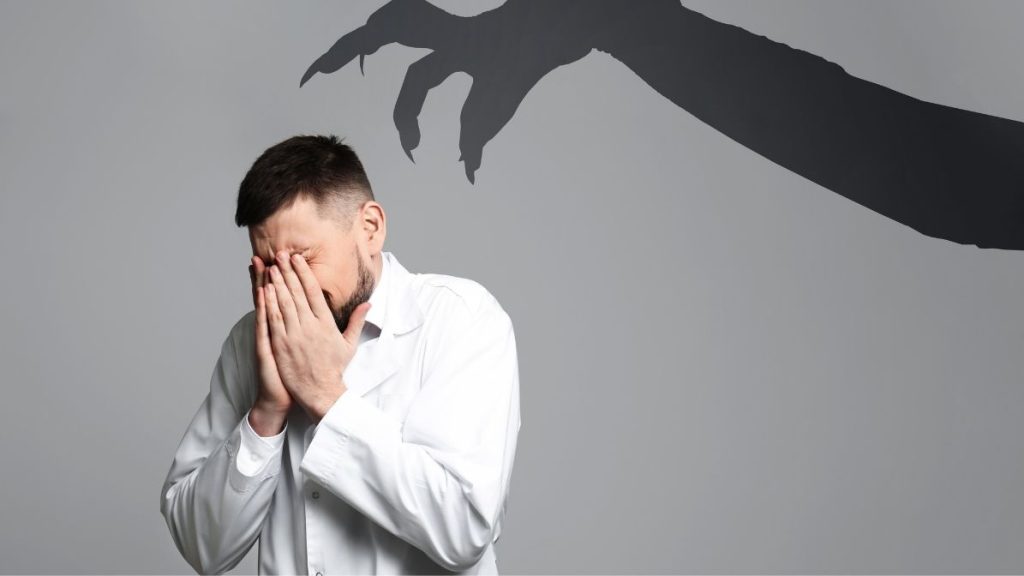
The AI Fear Narrative: How “Falling Behind” Is Being Used to Sell You
Is AI being sold through fear? Discover how the “falling behind” narrative drives emotional decisions, manipulates urgency, and disconnects you from creating your own future.

A Human-First Business
There is another way! A human-first business uses AI as a tool to support thinking and efficiency all while you remain the creator, the decision-maker, and the voice behind it all.